
Sally's mother was called in to see the teacher in the fall of sixth grade.
The teacher was frustrated, and she had her reasons. Every day she asked for homework, and every day Sally did not have it. It was in her locker, Sally would say. So the teacher would send her out to the hallway to get it, the class would wait, and the next day it would happen all over again. The teacher was ready to start giving her detentions for being so disorganized.
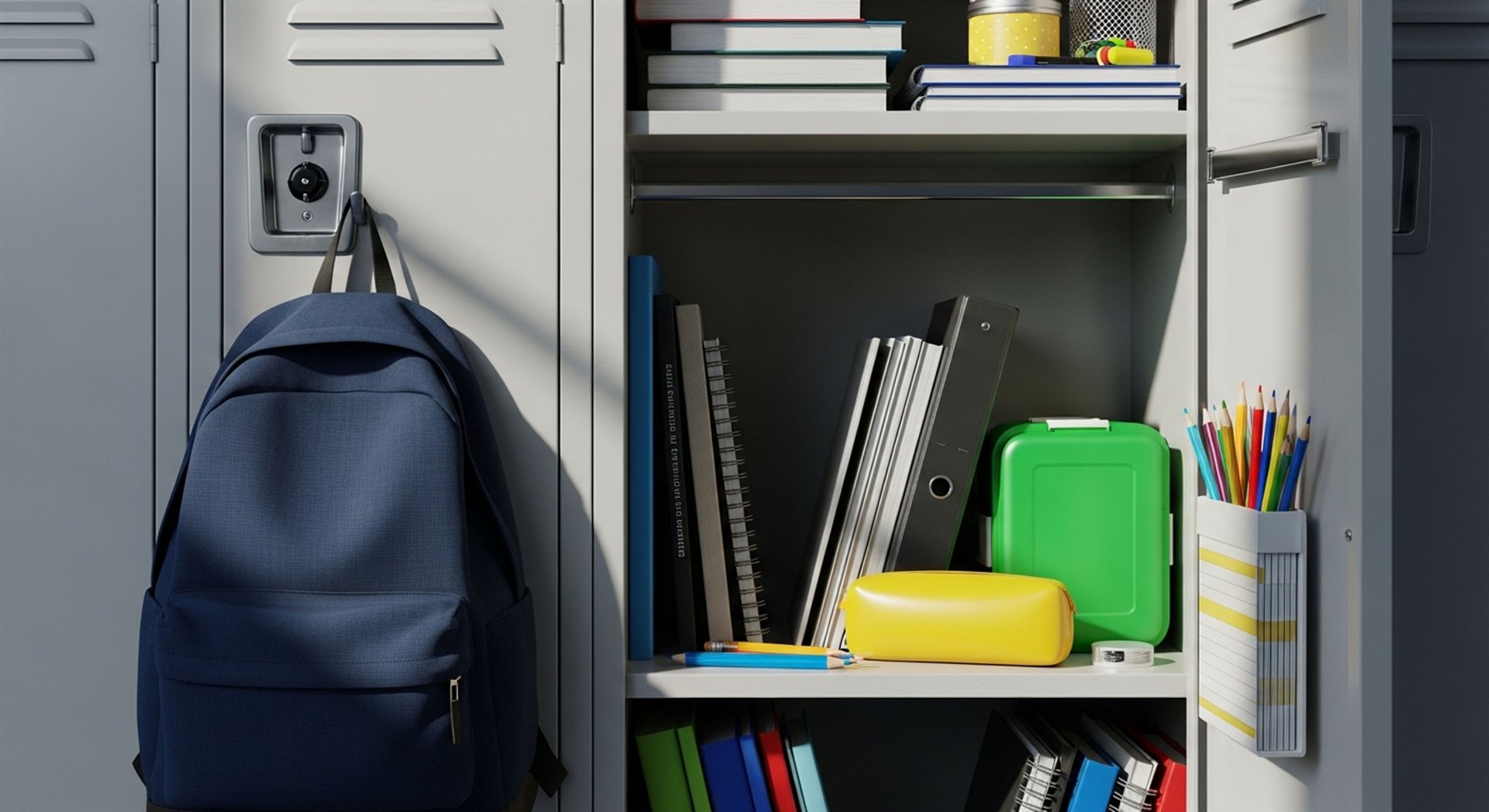
Here is the part worth slowing down for. The homework was done. It was sitting in the locker. Sally had finished the hard part of the job and was losing the easy part.
Her mother asked one small question. Could the teacher simply ask Sally to check her locker before she sat down?
The teacher was not thrilled. It sounded like one more thing to manage for a child who ought to be managing herself. She agreed to give it a try anyway.
It worked. The teacher now cues Sally to stop at her locker on the way in, before she goes to her desk, and the homework comes into the room with her.
"Bring your homework" sounds like one instruction. For Sally it is a chain of six steps:
- Remember that the homework exists.
- Remember where it is.
- Remember to stop there before class, not after.
- Take it out.
- Carry it in.
- Hand it over.
Every link has to be held in mind while she walks down a crowded hallway, works a combination lock, and answers a friend who is talking to her. If one link drops, the whole chain fails, and from the front of the classroom a dropped link looks exactly like not caring.
Her mother's idea worked because it moved the plan out of Sally's head. The adult held the sequence. Sally only had to do the one step in front of her.
The place where those links are held has a name. Working memory is the mental notepad you use to keep something in mind while you do something else. You know what it feels like when yours fails, because you have walked into a room and forgotten why you came. Sally lives in that doorway several times a day.
Working memory sits under a larger umbrella that we call executive function: planning, sequencing, organizing, keeping track of time, and getting started. When those skills are weak, a bright child looks careless, and nobody can quite say why.
Sally had another teacher, and a second problem. She kept leaving her pencil in her locker, and every day she had to go back out for it. This teacher had a rule for the whole room: any student without a writing utensil ready got a detention.
It is a reasonable-sounding rule. It is the same for everyone, and it teaches responsibility, and for most eleven-year-olds it works. For Sally it meant a detention for the very thing she could not do.
Her mother asked for an exemption, because Sally has real trouble with sequencing and organization. It took almost a year. There was a lot of advocating and a lot of team meetings, and the exemption was resisted for a while before it was finally put in place.
Put those two classrooms side by side. Same child. Same gap. One teacher tried a cue that cost a single sentence, and it worked. The other rule took a year of meetings to bend. Nothing about Sally was different between those two rooms. What was different was whether the adult saw a habit to be punished or a step that needed holding.
When Sally was asked what she thought about the problem, she said:
"I'm not being lazy. I try every day, but I just can't seem to remember everything, especially when it's due."
Listen to the end of that sentence. Especially when it's due. A due date is a memory of the future. You have to carry it forward through days of other things and have it surface at the right moment. For a child like Sally, time is invisible. Next Friday does not feel any different from next month until it is suddenly today.
Sixth grade is where this usually breaks open, and there is a reason it waits that long.
In elementary school there is one teacher and one room. The desk holds everything. The teacher reminds, and the routine barely changes from day to day. In middle school there are six or seven teachers, each with their own rules, their own due dates, and their own ways of collecting work. Supplies live in a locker down the hall. The load multiplies overnight, at exactly the age when the adults decide a child should be doing it all on her own. A child whose memory for sequences was quietly propped up by one good teacher loses the prop all at once.
This series began with a seven-year-old who could not get his words out. The next two newsletters followed a boy named Charlie, at eight and nine. At seven the language problem looked like tantrums. At eight it looked like poor reading. At nine it looked like rudeness. Many children whose trouble started with language meet this next stage, too, because working memory and language lean on each other. At eleven it looks like laziness. It is the same kind of mistake every time: we judge what we can see and miss what is underneath it.
So here is what to watch for.
- Work that is done and never turned in. This is the single biggest tell.
- A child who remembers the first step of an instruction, or the last one, and drops the rest.
- A child who managed fine with one teacher and falls apart with six.
- The same thing forgotten in the same place, day after day.
- A big project left to the last minute by a child who honestly cared about it.
- Exhaustion and tears after school that seem out of proportion to the day.
- A child called lazy by the same adults who say she is bright.
If that list sounds like your child, here is what I would tell you if you were sitting across from me.
Hold the sequence outside her head. A written checklist taped inside the locker door does more than any lecture about being organized. Make it the actual steps, in order: homework folder, pencil, book. A child cannot follow "be organized." She can follow a list.
Ask for one cue at one moment, the way Sally's mother did. Small and specific beats big and general. A reminder at the locker, right before it is needed, is worth more than a reminder at breakfast.
Break every due date into pieces, and give each piece a date of its own. One big deadline three weeks away is invisible. Four small ones are not.
Do not punish the gap. A detention for forgetting does not teach a child how to remember. It only teaches her that she is the kind of person who forgets.
If the pattern holds, ask your school in writing for an evaluation that looks at working memory and executive function, and not only at grades. If you need an exception to a classroom rule, ask for that in writing too, and name the reason. Sally's mother needed a year. You may not, if the reason is on paper from the start.
Sally did not need a detention. She needed one adult willing to hold the first link of the chain.
If you work in a school and one particular student came to mind while you were reading this, please forward it to that child's parent. Somebody has already told them their child is disorganized. Nobody has told them why.
Warmly,
Dr. Pat
Patricia McGuire, MD, FAAP
Developmental-Behavioral Pediatrician
P.S. I wrote a short novel about a boy in exactly this spot. His name is Marcus. He is eleven, he is starting middle school, and he can explain how a machine works better than his teachers can, but he cannot hold onto a list of three directions long enough to finish them. It is called Lost in Translation. By the end, he has worked out that his brain is not broken. It simply needs the world translated into a form it can use: written steps, checklists, things he can see.





Responses